Washing Machine Overflow Cleanup in Bellingham, MA
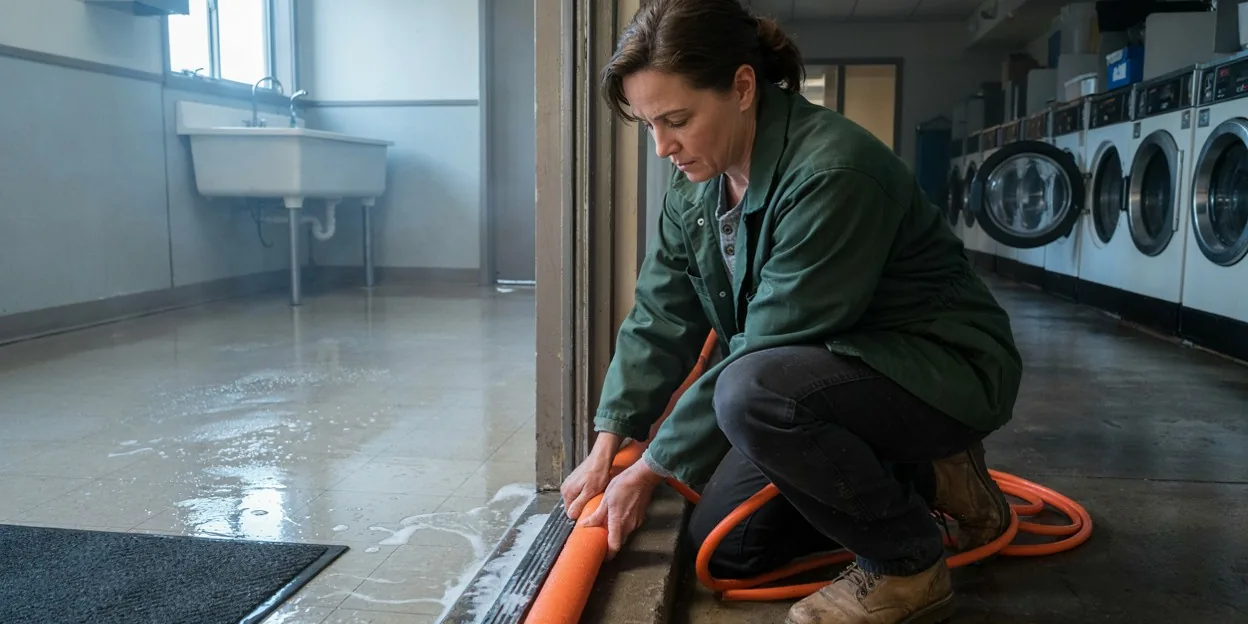
You started a load before leaving for work. When you got home the second-floor laundry closet was a quarter inch deep, the hall carpet was wet to the top of the stairs, and there was a bulge in the kitchen ceiling directly underneath. Call us now and tell us what you see. We connect you with an independent local provider who handles washing machine overflow cleanup in Bellingham and across Norfolk County.
Hose or drain: the answer changes how far the water went
The crew shuts the supply valves behind the machine and figures out what failed. A rubber supply hose that split under pressure runs until someone closes the valve, which can mean hundreds of gallons. A drain hose that popped out or a standpipe that backed up puts out one tub of water per cycle. The difference changes how far the water went.
Then they pull the machine out, extract the standing water, and follow the path. A laundry room on the first floor sends water under the flooring, into the hall, and down into the basement ceiling. A second-floor laundry sends it through the subfloor into the ceiling below and down the walls. They meter the floor, the walls, and the ceiling under the laundry, and the readings decide what gets opened.
Both valves closed, then follow the water downstairs
Close both supply valves behind the washer, hot and cold. If they are stuck or you cannot reach them, shut the main valve in the basement. Unplug the machine only if the floor around it is dry and the outlet is dry; otherwise cut the breaker. If the water reached a light fixture or an outlet in the room below, cut that breaker too.
Pull up the rugs and get the laundry baskets and anything on the floor out of the room. If a ceiling below is sagging, stay out from under it. Take photos of the floor, the walls, the ceiling, and the hose or drain that failed before anything is moved. Then call us.
Tile wipes clean, the ceiling below may not
Tile and vinyl floors clean up once the water is out. Framing, subfloor, and joists usually dry in place if the crew reaches them within a day or two. Hardwood in a hall next to the laundry can often be dried if it is caught early. The crew meters it before anyone pulls a board.
Carpet pad in the hall almost always goes. Laminate flooring and particleboard cabinet bases in the laundry room usually go. A wet drywall ceiling below often comes down at least in part, and wet insulation above it always does. If the drain backed up rather than the supply hose failing, the water has been through the machine and possibly the sewer line, and porous materials get handled as contaminated. Once the wet materials are out, structural drying finishes the job. For the wider category of what a supply line does when it lets go, read about burst pipe water damage.
Second-floor laundry closets in Franklin and Wrentham colonials
Laundry moved upstairs in this market during the 1980s and 1990s, when builders in Franklin, Wrentham, and Norfolk started putting the washer on the second floor of the new colonials. Those closets sit over kitchens and family rooms, and most were built without a floor drain or a pan. In the older 1960s houses the washer is in the basement, where an overflow spreads across the slab and into the finished side of the room.
Rubber supply hoses fail more often in the winter, when the water coming in from a Massachusetts main is near freezing and the hot line is not. Braided stainless hoses last longer, and the crew will usually suggest them once the cleanup is done. Homes on a well have no street pressure to fall back on, but a split hose still runs until the pressure tank empties and the pump refills it, over and over, until the valve is closed. If you are not sure where the water actually came from, leak detection sorts that out first.
Many policies cover a failed supply hose as a sudden loss. A drain backup can fall under a separate water backup endorsement, and the mold that follows a wet ceiling is often capped. Nobody on this site can tell you what your policy says. Ask the crew to photograph the failed hose and log the readings so the cause is on paper.
When you call about a washer overflow
Tell us whether the supply hose or the drain failed, whether the valves are closed, and roughly how long the water ran. Say which floor the laundry is on and whether the ceiling below is wet. Call (508) 570-0957.