Water Damage Restoration in Dedham, MA
Dedham was founded in 1636, has been the county seat since Norfolk County was formed in 1793, and holds the oldest timber-framed house in North America, built around 1637 on East Street. It also holds the first canal in the country: Mother Brook, dug in 1639 to carry Charles River water across town to the Neponset to run a grist mill. The Charles wraps the town on the north and west, the Neponset runs along the east, and the neighborhoods between them are a mix of 1800s houses in Dedham Square and along High Street, 1920s to 1950s two-families and capes in Oakdale and East Dedham, and 1950s and 1960s ranches and colonials in Precinct One, Riverdale, and Greenlodge.
Riverdale and the low streets along the Charles sit in the river's flood plain, and the March 2010 storms put water in basements there for weeks. Mother Brook still carries Charles water through East Dedham, and the old mill housing along it has stone cellars that seep every spring. The 1950s houses across town have plumbing on exterior walls that the February 2023 cold found.
We connect Dedham homeowners by phone with an independent local water damage provider. The provider looks at the house and sets the scope.
Dedham water damage, between two rivers
A Riverdale basement that took Charles River groundwater through the slab is a basement flooding cleanup job. A stone cellar in East Dedham along Mother Brook that seeps every March is a structural drying problem as much as an extraction one. A 1920s two-family with a stain spreading on the first-floor ceiling calls for leak detection before the plaster comes down.
Keeping a Dedham house dry for the next generation
The Fairbanks House has stood on East Street since about 1637, eight generations of one family kept it dry, and it is a fair reminder that a Dedham house can last if the water is managed. Rebuild permits after a water loss go through the Building Department at Town Hall on Bryant Street, and the water district shared with Westwood handles anything on the street side of the meter.
Call (508) 570-0957 now and tell us what you see. We connect you with a local water damage provider serving Dedham.
Services Available in Dedham
Water Extraction
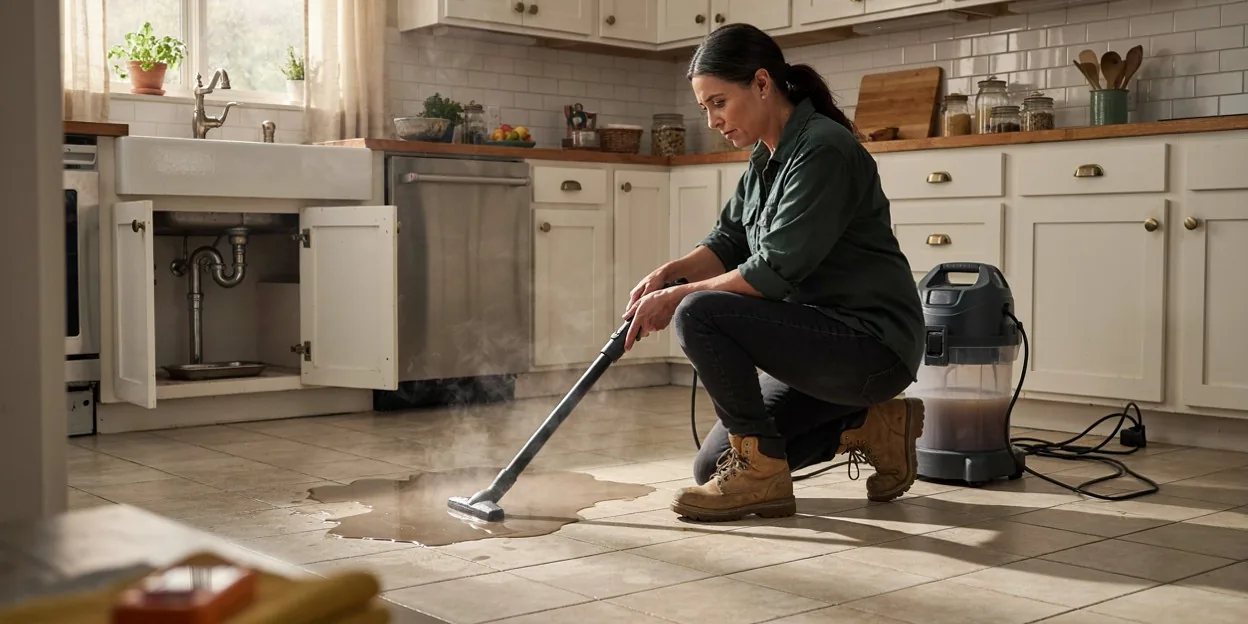
Standing water pumped off a basement slab, a kitchen floor, or a finished lower level, then the first meter readings to see how far it spread.
Structural Drying
Air movers and dehumidifiers run by the readings until sill plates, subfloor, and drywall come back to their dry target.
Basement Flooding Cleanup
Groundwater, a failed pump, or a spring thaw put water in the basement. The crew pumps it out and dries the finished walls and floor.
Sump Pump Failure Cleanup
The pit overflowed during a storm or an outage. Water is extracted and the carpet, framing, and stored belongings are checked and dried.
Burst Pipe Water Damage
A supply line let go in a ceiling or wall. The rooms below and beside it are pumped out and dried once the water is shut off.
Frozen Pipe Cleanup
A pipe froze in a garage wall, an attic, or an unheated room and split. Cleanup covers everything the thaw soaked.
Washing Machine Overflow Cleanup
A hose failed or the drain backed up. Water in the laundry room, the hall, and the room below is extracted and dried.
Leak Detection
Finding a hidden leak behind a wall, under a slab, or in a well line before anyone opens the wrong wall.